Hot water heat exchangers do a lot of quiet work in an industrial plant. When they are sized right and cared for, they help keep product on spec, lines moving, and people safe. When they start to slip, the whole system can feel slow and stressed, especially when the weather heats up and demand is high.
We work with teams that depend on hot water every hour of the day. In this article, we will walk through why units underdeliver, how to spot trouble early, what usually causes it, and why plate and frame design is such a strong choice for hot water duty. We will also talk about smart maintenance moves that keep your process stable through summer peaks.
When “Good Enough” Hot Water Heat Exchangers Fail You
When outside air is cooler and production is light, a weak hot water heat exchanger might seem fine. The unit reaches setpoint, alarms stay quiet, and any lost performance hides in the background. As summer hits and ambient temperatures rise, that same unit can start to show its age fast.
Hidden costs show up in different ways, such as:
- Lower throughput because lines need more time to reach temperature
- Product quality issues when you cannot hold a tight temperature band
- Higher energy use as boilers and pumps work harder
- Unplanned downtime when the unit finally reaches a breaking point
For plants that run mission-critical processes, “good enough” is not really good enough at all. You need heat exchangers that are engineered and supported for the duty, not just dropped in as general-purpose equipment. That is the space we work in as a plate and frame heat exchanger partner for industrial operations.
How to Spot an Underperforming Heat Exchanger Before It Stops You
Heat exchangers rarely fail in one day. They fade. If you know what to look for, you can catch that fade long before you are dealing with a shutdown and a room full of people waiting on hot water.
Common early warning signs include:
- The unit struggles to reach setpoint, especially at peak production
- Bigger temperature swings hour to hour or batch to batch
- Longer batch times or slower start-ups
- Higher pump pressures or unusual noise in the system
- Alarms that show up more often, then get brushed aside
Summer often makes these red flags louder. Operators might run equipment longer, override controls just to “get it done,” or delay cleaning in place because the schedule is already tight. Each of those choices adds stress and hides the real issue, a heat exchanger that has lost performance.
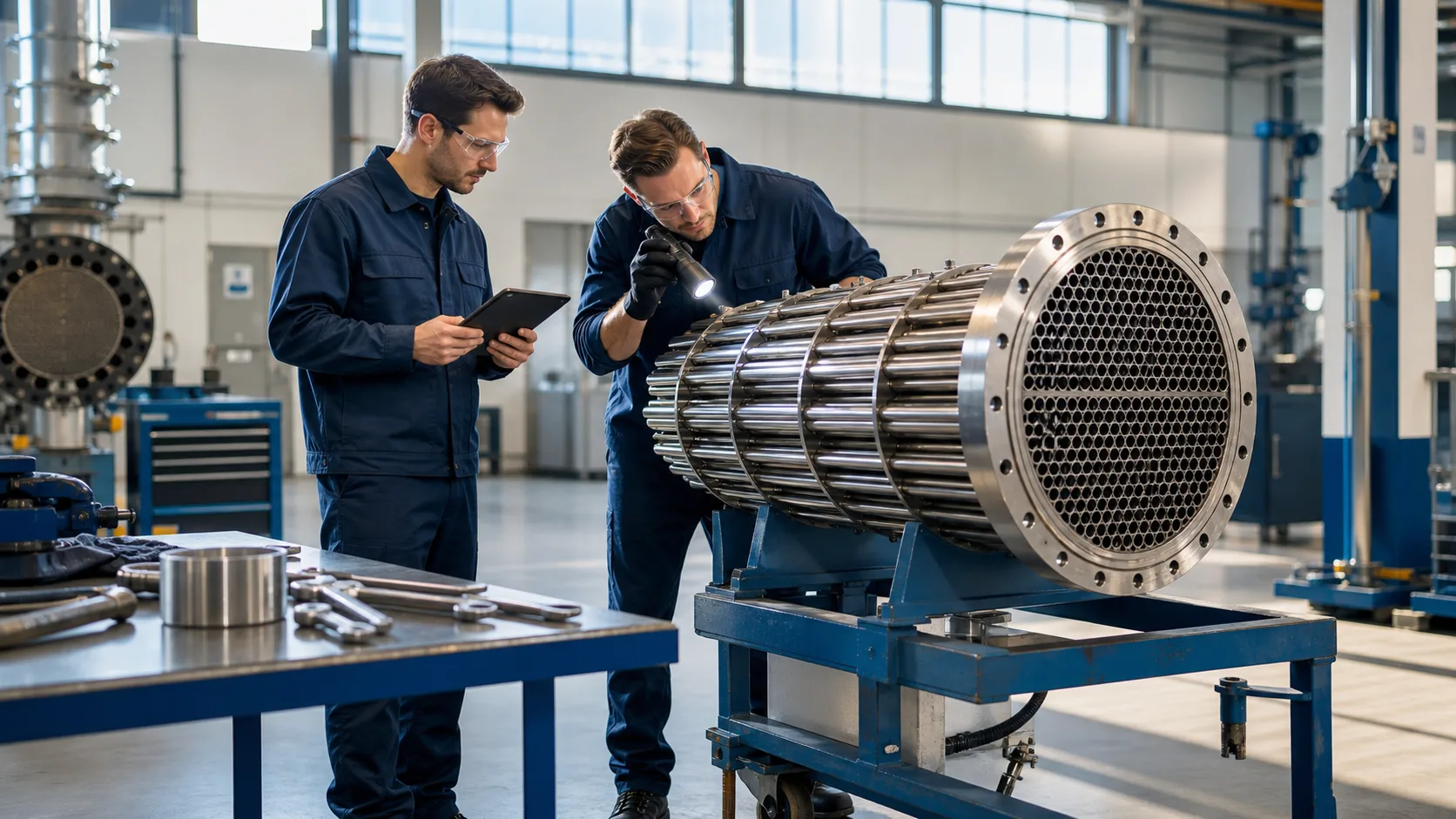
Trending data is one of your best tools. Watching approach temperature, pressure drop, and energy use over time tells a clear story. Pair that with routine visual inspections for leaks, staining, or gasket problems, and you have a strong early warning system before a small loss becomes a full stop.
The Real Reasons Hot Water Heat Exchangers Underdeliver
When a hot water heat exchanger underdelivers, the root cause is usually not a mystery. It is often a mix of mechanical wear, fouling, and past design choices that no longer fit how the plant runs today.
On the mechanical side, problems often include:
- Fouling and scaling on plates that choke off heat transfer
- Gasket fatigue that leads to bypass or leaks
- Channel blockage from debris in the system
- Thermal fatigue from repeated hot and cold cycles
Design and selection issues can be just as serious. Units may be undersized for current loads, built with the wrong plate pattern for the duty, or made from materials that do not match the process fluids very well. Sometimes a general-purpose hot water heat exchanger is used in a demanding industrial role where it simply does not hold up over time.
Then there is the lifecycle story. Maintenance gets pushed out, OEM or aftermarket support is limited, or replacement parts are ordered as simple “like-for-like” without checking if they truly match the original design intent. Over years, all that adds up to a unit that still looks fine from the outside but no longer meets what the process really needs.
Why Plate and Frame Design Is the Workhorse for Hot Water Duty
For hot water service in industrial systems, plate and frame heat exchangers bring a mix of performance and practicality that fits how plants really run. That is why so many teams rely on them as their day-to-day workhorse.
Key benefits include:
- High thermal efficiency in a compact footprint
- The ability to adjust capacity by adding or removing plates
- Strong responsiveness when loads and conditions change through the day
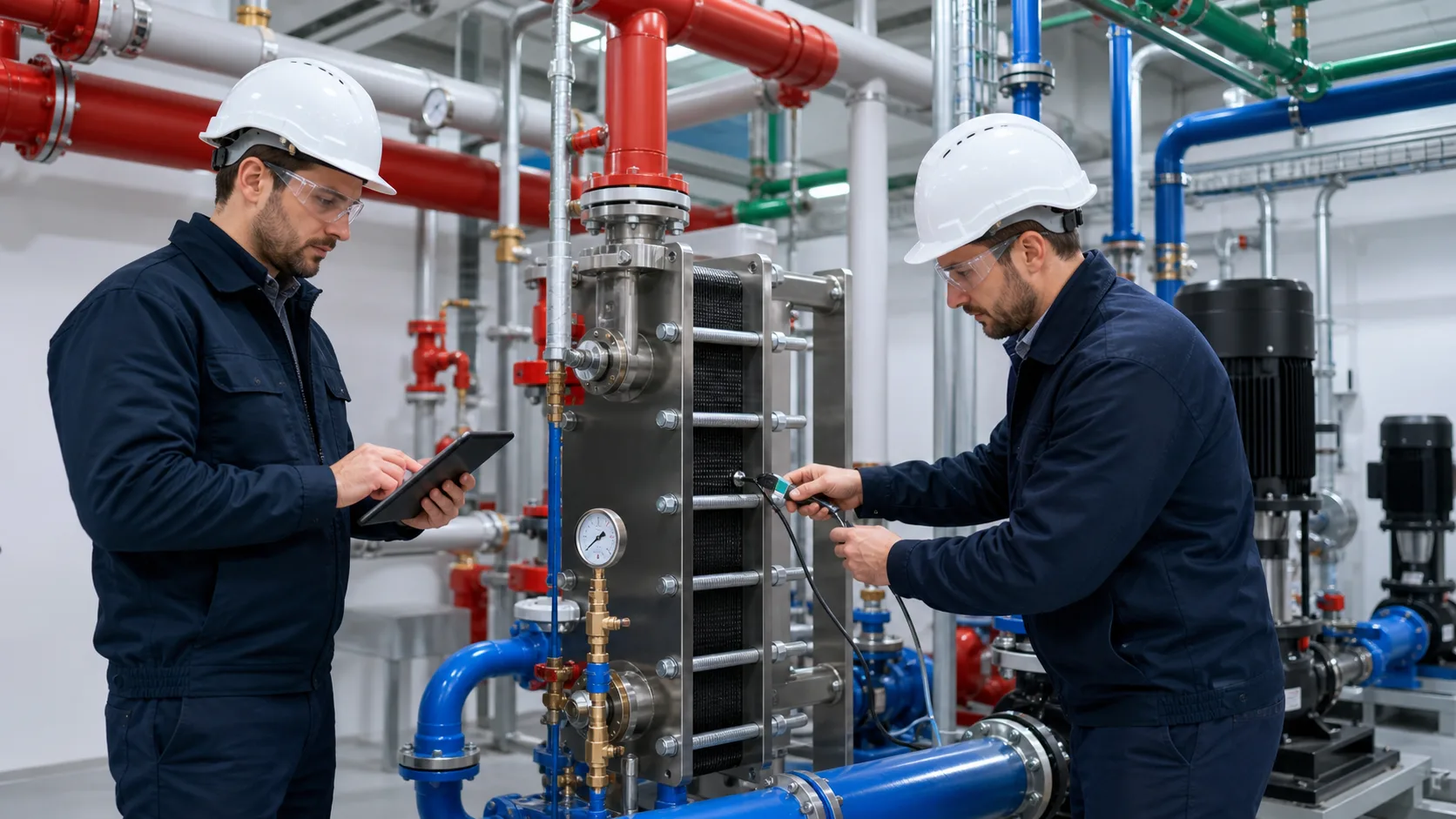
Serviceability is just as important as raw performance. Plate and frame units can be opened for cleaning, inspection, and gasket replacement without long outages or heavy lifting. That matters when production windows are tight and every extra hour of downtime hurts.
Quality plates and gaskets are a big part of how well these units run. Correct metallurgy for the process fluid, the right plate geometry, and gasket materials that hold up under your specific temperatures and chemicals all play a part. Good engineering and reliable OEM and aftermarket sources directly support uptime, safety, and energy efficiency in hot water duty.
Strategic Maintenance That Keeps You Running Through Peak Season
Waiting for alarms or leaks is not a maintenance plan. A better approach is to time proactive work ahead of your highest-load season so your heat exchangers are ready when summer arrives and production ramps up.
A practical strategy for hot water units can include:
- Planned inspections in the spring focused on plates, gaskets, and frames
- Cleaning and descaling as needed to get back to clean-plate performance
- Gasket replacement before they reach end of life, not after they fail
Best practices start with knowing what “good” looks like. Setting baselines for cleanliness, pressure drop, and approach temperature helps your team spot real change. Condition-based triggers, like a certain rise in approach temperature or pressure drop, give you clear signals for when to schedule service instead of guessing.
Expert on-site service adds another layer of protection. When people who work on plate and frame units every day handle troubleshooting, torqueing, and reassembly, you reduce the risk of repeat issues. Proper refurbishment can often restore performance close to original design capacity without replacing the entire unit.
Turning Underperforming Units Into Competitive Assets
A hot water heat exchanger that is underdelivering is not always a sunk cost. With the right engineering support, it can become an opportunity to improve reliability, energy use, and process control.
Options might include re-rating the unit for current operating conditions, changing the plate pack, or moving to a tailored replacement that uses modern plate and frame technology. Many plants also review spare plate and gasket inventory so they are ready for planned outages and not waiting on parts while production is on hold.
From our perspective at C.J. Mulanix Co. Inc., the goal is simple: every hot water heat exchanger in your industrial system should perform at the level your process truly needs, not just at a “good enough” level that only works on mild days. With thoughtful planning, the right hardware, and solid field support, that goal is very realistic for most plants.
Get Started With Your Project Today
If you are planning or upgrading a hot water heat exchanger system, we can help you choose the right solution and ensure it is installed correctly. At C.J. Mulanix Co. Inc., we draw on decades of field experience to match your application with dependable, efficient equipment. Share your project details and goals, and we will provide clear recommendations and next steps. To schedule a consultation or request a quote, please contact us today.