
Water & Wastewater
Water & Wastewater Gaskets / Plates
Get the Right Gasket, Right Plate, Right Now – Your Trusted Source for Heat Exchanger Parts.
Water & Wastewater Heat Exchanger Solutions
Overview & Key Applications
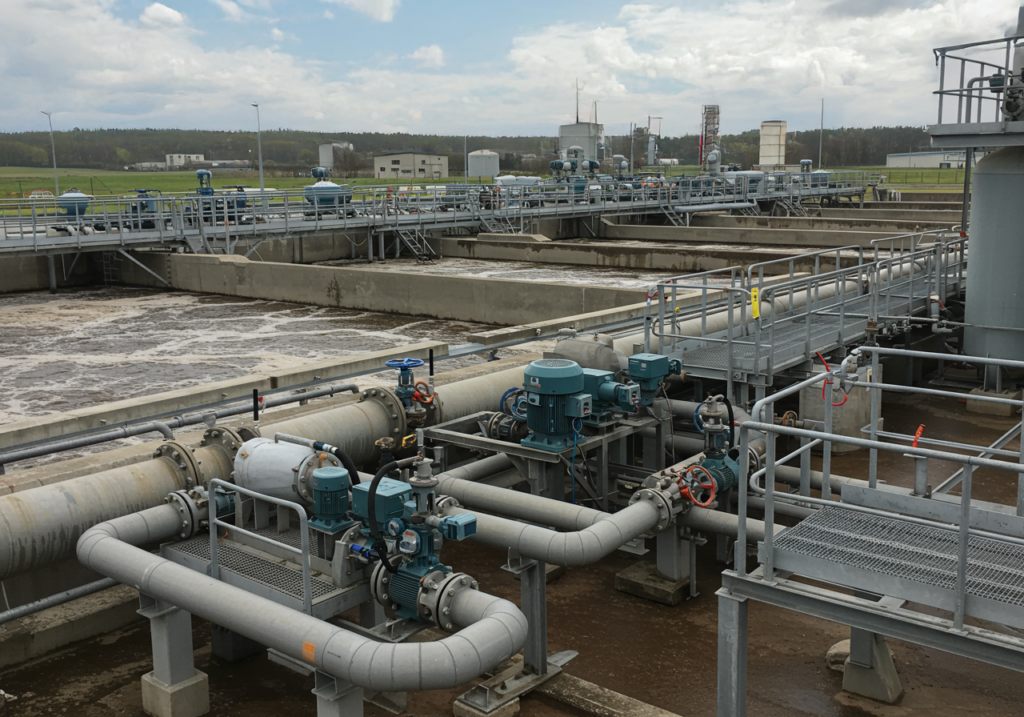
In water and wastewater treatment, PHEs recover heat from treated effluent to preheat incoming raw water, cool or heat process streams like digester sludge, and temperature-control biological reactors—significantly reducing overall plant energy demand.
Plate Materials & Hygienic Design
Plates are typically stainless steel (304 or 316L) for corrosion resistance in most water streams. For highly aggressive fluids (seawater, brines, high chlorides), higher-alloy materials such as 317L, titanium, SMO 254, Hastelloy, or Incoloy are selected to ensure longevity and minimize fouling.
Gasket Material Guide
Picking the right gasket is all about matching temperature, chemical exposure, and cleanability:
EPDM:
The go-to for chlorinated water, ozone, hypochlorite, and dilute acids/alkalis in sludge heaters at ~35–60 °C.
NBR:
Employed when oil or hydrocarbons are present (e.g., landfill leachate, groundwater remediation) up to ~110 °C.
FKM/Viton:
Applied in chemical-plant effluents containing acids up to ~125 °C, though used sparingly due to cost.
Neoprene (CR):
Occasionally for chlorinated or seawater coolers, but largely supplanted by superior EPDM.
Top Manufacturers & Models
When it comes to spares availability and service backing, these brands lead the pack:
Alfa Laval:
Kelvion (GEA):
NT Series with titanium plates for desalination energy recovery; GF (“GapFlow”) for solids‐bearing streams—EPDM gaskets.
Danfoss (SONDEX):
Free Flow (S121) for sludge; Standard PHEs for groundwater loops—EPDM-HT gaskets.
Tranter:
Superchanger® units for chemical wastewater cooling—EPDM or FKM gaskets, with mixed gasket setups available.
Xylem (Bell & Gossett):
Plateflow and GPX series for industrial water systems—nitrile/EPDM gaskets.
API Schmidt-Bretten, Funke, Barriquand:
SIGMA and regional models offering standard elastomer choices.
Water & Wastewater Gaskets and Plates
| Manufacturer | Popular Model(s) | Typical Gasket Materials |
|---|---|---|
| Alfa Laval | Industrial Line, WideGap plate heat exchangers, Free Flow plate heat exchangers | NBR, EPDM, Viton, HiGH Temp Versions |
| Alfa Laval | P Series P16, P26, P36 | NBR, EPDM, Viton, HiGH Temp Versions |
| Alfa Laval | Freshwater Generators AQUA80 | NBR, EPDM, Viton, HiGH Temp Versions |
| Danfoss (Sondex) | SONDEX® Standard plate heat exchangers, Free Flow plate heat exchangers, SF Series | NBR, EPDM, Viton, HiGH Temp Versions |
| Kelvion | Gasketed Plate Heat Exchangers, Free Flow series, ND Series | NBR, EPDM, Viton, HiGH Temp Versions |
| Paul Mueller Company | Accu-Therm Plate Heat Exchanger, Accu-Therm "Free-Flow" | Likely EPDM, NBR |
| SWEP | GX Series | NBR, EPDM, Viton, HiGH Temp Versions |
| Tranter | UX & GX Series | NBR, EPDM, Viton, HiGH Temp Versions |
| Viex | VXN Series | NBR, EPDM, Viton, HiGH Temp Versions |
| Xylem (Bell & Gossett/Standard Xchange) | Plateflow Series, GPX Series, Plateflow Series Free Flow | Nitrile, EPDM, Elastomer gaskets |
Frequently Asked Questions
In the Water & Wastewater industry, PHEs are used for various applications aimed at improving the efficiency of treatment processes. This includes heat recovery from treated wastewater to preheat incoming raw water, reducing energy consumption, and temperature control in different stages of water treatment. The plates are typically made from stainless steel (304 or 316L) for general applications, but higher grades of stainless steel, titanium, or other corrosion-resistant alloys are used for more aggressive environments like seawater desalination or industrial wastewater. Gaskets must resist water and various chemicals encountered in treatment processes, such as chlorine, ozone, dilute acids, and alkalis. EPDM is a prevalent choice due to its resistance to water treatment chemicals, brine, seawater, and alkaline lye. NBR is used if the water contains oil or hydrocarbons. Viton is used in specialized cases where wastewater contains corrosive chemicals like concentrated acids. Neoprene is occasionally used for chlorinated water. Fouling from solids in wastewater or sludge is a significant consideration, leading to the use of wide-gap or free-flow plate designs to prevent clogging.