Catch Problems Early to Protect Your Process
Shell-and-tube heat exchanger bundle health is not a nice-to-have, it is core to keeping your plant steady, efficient, and safe. When a bundle starts to slip, you feel it in slow ways at first, like higher energy use or a harder time holding temperature. As colder weather comes and heating loads grow, those small slips can turn into real production risk.
Most bundles do not fail all at once. Fouling builds up on tube surfaces, tubes wear, flow paths shift, and performance fades long before a leak or a hard shutdown. If no one is watching, the first real sign might be an alarm that trips in the middle of a busy shift.
In-field verification gives mechanical contractors, plant engineers, and facility teams a practical way to stay ahead of that curve. With simple checks, good notes, and a clear process, you can stretch equipment life and plan outages on your schedule, not the bundle’s. At C.J. Mulanix Co. Inc., we help turn what you see and measure in the field into clear options: clean, repair, retube, or replace.
What Healthy Heat Exchanger Bundles Look Like
A healthy shell-and-tube heat exchanger bundle behaves in a steady, predictable way. The approach temperature sits close to design or past good performance, pressure drops stay within the normal range, and your process sees stable outlet temperatures. Startup after nights or weekends should be simple, without long waits or surprises.
In day-to-day operation, healthy bundles usually show:
- Steady outlet temperatures with only small swings
- No hot or cold spots along the shell or heads
- No unusual vibration, rattling, or tube noise
- Shell-side and tube-side pressure readings that line up with historical data
These signs matter for energy use. When heat transfer slips even a little, your boilers, chillers, or other upstream equipment need to work harder. That can mean higher fuel or electric consumption, slower response to load changes, and more wear on pumps and control valves. As heating or cooling loads ramp up, any hidden weakness in the bundle tends to show up quickly.
For facilities running energy, biotech, food and beverage, HVAC, or water and wastewater systems, a healthy bundle also protects product quality and regulatory targets. Stable heat transfer supports clean-in-place routines, controlled reaction temperatures, and tight discharge limits.
Field Clues Your Tube Bundle Is in Trouble
Before a bundle fails, it usually starts sending quiet warnings. Paying attention to these clues during rounds helps you catch issues early.
Common operational red flags include:
- Higher approach temperature at steady load
- Falling heat transfer even though flow and inlet temperatures are the same
- Uneven performance between parallel units on the same service
- More frequent nuisance trips, alarms, or control valve hunting
During walkdowns, you might see or hear other signs:
- Leaks or staining at channel covers, gaskets, or flange joints
- Shell “sweating,” damp insulation, or localized corrosion spots
- Discolored or damaged insulation around nozzles or heads
- Fouling buildup at inlets and outlets, such as sludge or scale
- Rattling or humming that points to tube vibration inside the shell
Seasonal patterns tell their own story. You may notice steam use creeping up as outdoor temperatures drop, even though production stays the same. Setpoints can be harder to hit in shoulder seasons, or startup after a weekend takes longer, with equipment needing more time to warm up or cool down. These are all hints that the shell-and-tube heat exchanger bundle is not as healthy as it once was.
Practical in-Field Checks to Verify Bundle Health
You do not need a full teardown to get a good first view of bundle health. A structured set of in-field checks can show where to focus.
Start with simple temperature and pressure readings:
- Record inlet and outlet temperatures on both sides of the exchanger
- Calculate approach temperatures and compare with past “good” records
- Track pressure drops across shell-side and tube-side at steady loads
- Note any slow drift in readings week to week or season to season
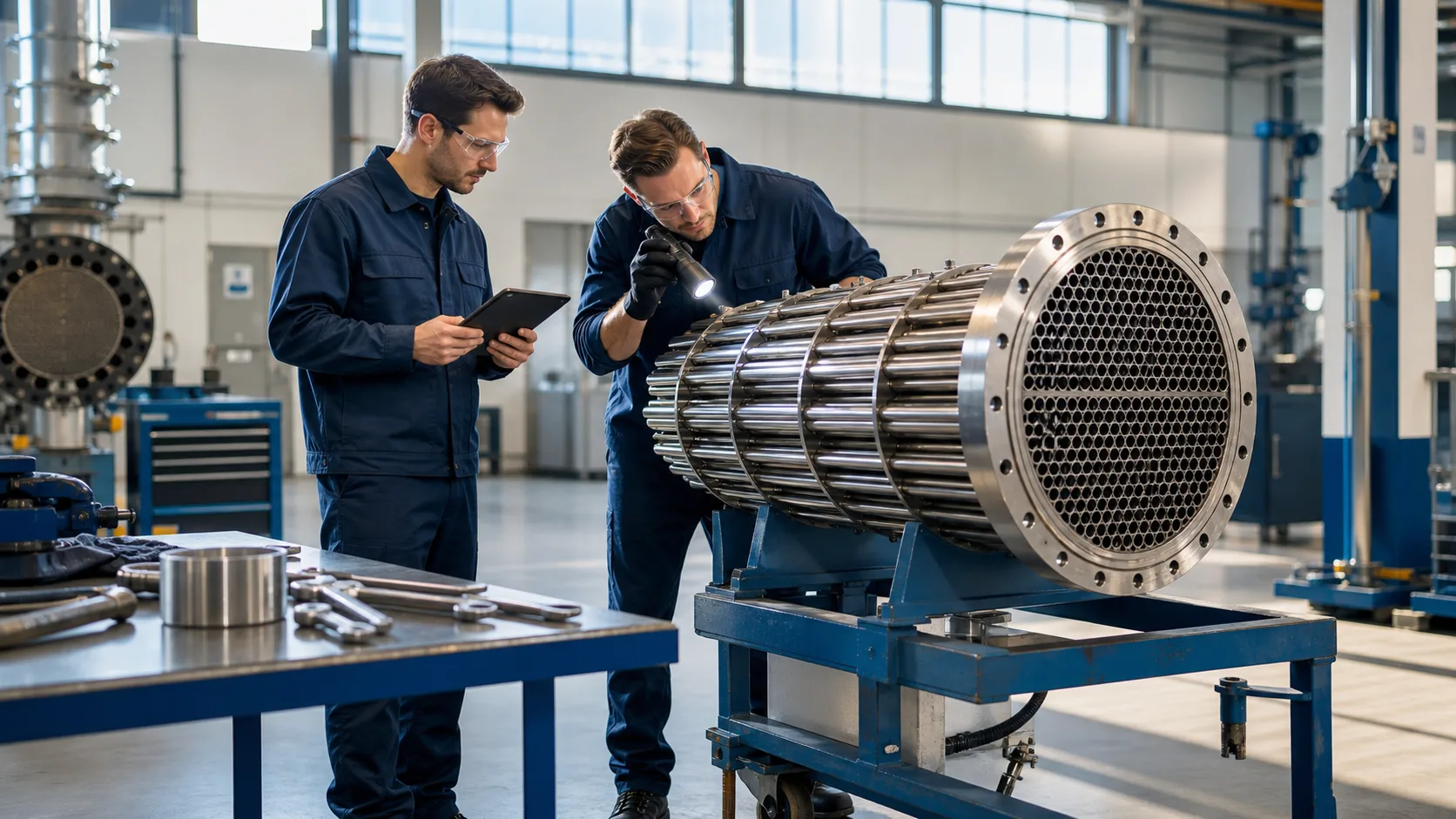
Non-invasive tools can add more insight. Infrared thermography helps you spot cold or hot passes on the shell, which can signal blocked or bypassing tubes. Where practical, ultrasonic tools can help check wall thickness or leak paths without opening the unit. Portable data loggers let you follow trends for several days, which is helpful when loads change often.
Good preparation makes these checks much more useful. Before you head to the field, pull:
- P&IDs and any vendor data sheets you have
- Recent operating logs and alarm histories
- Water or process fluid quality reports
If you can, time your review during realistic loads. Shoulder seasons, when units are running but not fully pushed, are often ideal for spotting slow changes without production pressure. For sites around the Pacific Northwest, for example, the shift from mild to colder, wetter weather is often when hidden bundle issues show up.
When to Clean, Repair, or Replace the Tube Bundle
The hard question is not whether a bundle is perfect, but what to do about what you see. That comes down to thresholds for cleaning, repair, or replacement.
Cleaning often makes sense when:
- Pressure drop has climbed above normal by a noticeable margin
- Approach temperature has drifted well above past performance
- You see fouling at nozzles or heads and suspect more inside
Mechanical cleaning works well for some services, while chemical cleaning can reach areas brushes cannot. Timing is important. Many facilities prefer to clean during planned fall outages, before peak winter heating demand. After cleaning, it is smart to confirm performance with fresh temperature and pressure readings.
Repair vs replacement is usually driven by tube condition. If you are plugging more tubes over time, you slowly lower effective area and reduce capacity. Localized corrosion, erosion from high-velocity flows, or damage from vibration can all signal deeper problems. At some point, more plugging starts to hurt performance enough that a partial or full bundle replacement becomes the better choice.
Lifecycle thinking helps here. A bundle that drags down efficiency, stresses other equipment, and triggers emergency service can cost more over time than a planned refurbishment or a well-designed new bundle. That is where a specialized provider with deep heat exchanger experience can add real value.
How Expert Partners Strengthen Your Field Assessment
Even with good field checks, making the right call can be tricky. A shift in temperature might come from fouling, but it can also point to control or flow issues upstream. An expert partner can help sort out root causes so you do not clean a clean bundle or replace one that still has years of life left.
A heat exchanger specialist can:
- Review your field data and compare it with expected behavior
- Help confirm whether fouling, mechanical damage, or flow problems are driving the issue
- Recommend cleaning methods and inspection points that match your service
Design and application skill also matter. Matching tube bundle geometry, metallurgy, and gasket selection to actual service conditions in energy, biotech, food and beverage, HVAC, and water or wastewater duties helps the new or refurbished bundle last longer and perform more consistently. That includes thinking about fluid chemistry, temperature swings, vibration risk, and maintenance access.
Across multiple sites, a structured assessment program adds even more value. Baseline testing, periodic checkups, and end-of-season reviews can be lined up with internal reliability teams and mechanical contractors to create shared standards. Over time, this kind of program helps you spot weak points early, prioritize projects, and keep shell-and-tube heat exchanger bundles ready for whatever the next season brings.
Get Started With Your Project Today
If you are planning or troubleshooting a shell-and-tube heat exchanger bundle, we are ready to help you move from concept to reliable performance. At C.J. Mulanix Co. Inc., we work with you to clarify specifications, address constraints, and identify practical solutions that fit your operation. Share your project details and questions so we can provide informed guidance before you commit to fabrication or field work. To discuss your needs directly with our team, please contact us today.