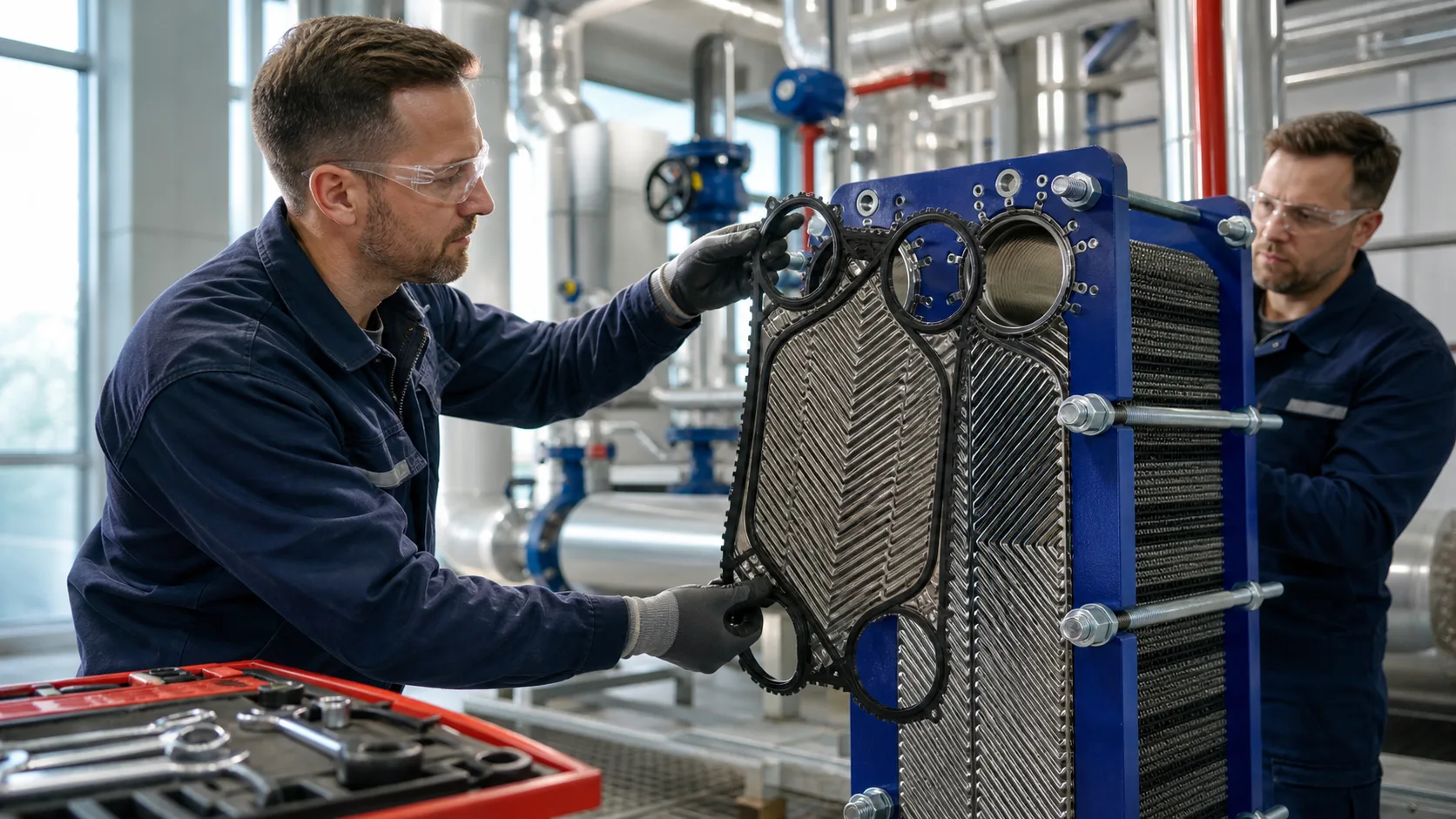

Stop Guessing Gasket Life and Start Predicting It
Heat exchanger gaskets do not usually fail at a convenient time. They fail when your boilers are under peak load, when heat recovery is maxed out, or when a key process cannot afford to stop. That is why guessing at gasket life based on the calendar is such a risky way to run critical plate-and-frame units.
A smarter approach is condition-based maintenance. Instead of swapping heat exchanger gaskets on a fixed schedule, you watch how they behave in real service. By tracking pressure and temperature trends, signs of leaks, and bolt torque over time, you can see when gaskets are starting to lose their seal long before you have a leak on the floor.
We work every day with mechanical contractors and facility teams who want fewer surprises and more planned outages. With the right data and simple action thresholds, heat exchanger gaskets can move from “we hope they last” to “we know when to act.”
Why Heat Exchanger Gaskets Fail Before Their Time
Plate-and-frame heat exchangers live in a tough environment. Even in a clean heating loop, gaskets feel constant thermal cycling as fluid temperatures change. In process or hygienic service, they also see pressure swings, vibration, aggressive cleaning chemistry, and sometimes abrasive solids. All of this slowly eats away at gasket elasticity and sealing force.
The main failure modes usually show up as:
- Compression set and torque relaxation, where the gasket slowly flattens and the clamping load from the bolts drops
- Chemical attack, where the gasket absorbs fluid or cleaning solution and starts to swell, soften, or crack
- Mechanical damage from misalignment, uneven tightening, or plate handling during maintenance
- Aging from repeated hot and cold cycles that harden the material and reduce its ability to rebound
These problems do not start as dramatic leaks. They start as small changes you can measure:
- Approach temperature drifts higher at the same flow and duty
- Pressure drop rises because of fouling or gasket restriction at the ports
- Small weeps or stains appear at plate edges or under the frame
- The same bolts or zones need frequent retightening to hold torque
The “nameplate life” of heat exchanger gaskets is just a rough guide. Actual life depends on:
- Cleaning methods and how aggressive the CIP chemistry is
- Total operating hours and how often you cycle the unit
- Changes in duty, such as hotter fluids, higher flow, or new products
- How the unit is assembled and torqued after service
To turn these clues into a real reliability plan, you need a baseline. The best time to capture that is right after commissioning or a full refurbishment. Clean plates, fresh gaskets, and correct torque give you a reference curve for pressure drop, approach temperature, and torque that you can compare against as the unit ages.
Tracking Pressure and Temperature Trends Before Winter Hits
As loads build with colder weather, every heat exchanger in the plant has to work harder. That makes the fall a smart time to confirm that sensors are accurate, logging is working, and your team knows what to look for in the data.
At a minimum, you want to trend:
- Inlet and outlet temperatures on both sides of the exchanger
- Pressure on both sides, or at least the differential pressure across the unit
- Approach temperature across the plates, tied to flow or production rate when you can
Once you have clean trend data, you can get a lot of insight from simple patterns.
Rising pressure drop at the same flow often points to fouling. If cleaning does not bring the pressure drop back to baseline, the restriction may be related to gasket movement or damage in the port areas. That should trigger a closer inspection.
A growing approach temperature, while fouling and flow seem stable, often signals bypassing. Fluid may be slipping past the heat transfer area through a bad plate seal or an area where the gasket has lost compression. That is a strong early sign that gasket condition needs attention.
Frequent, wide temperature swings, even when the unit is meeting setpoints, can shorten gasket life. If your process or HVAC control strategy causes sharp hot and cold cycles, that exchanger should be on a shorter monitoring loop, with closer review of trends and torque behavior.
Action thresholds do not have to be complicated. Many facilities start with:
- A custom percentage increase in pressure drop from baseline that calls for inspection or cleaning
- A set rise in approach temperature that triggers a closer look at gaskets and plate alignment
In hygienic services like food, beverage, or pharmaceutical production, you may choose tighter thresholds. Small losses in thermal performance can affect product quality, cleanability, and regulatory compliance, so a smaller drift can still be a big concern.
Leak Detection and Torque Checks That Actually Prevent Downtime
Most teams first notice gasket trouble when there is a visible leak, staining, or product on the floor. By that point, you are already in damage control. Subvisible weeping and vapor leaks often show up sooner, and they can be caught with a simple leak detection routine.
Practical methods include:
- Regular visual inspections focused on plate edges, bottom corners, drain pans, and footings
- Drip trays or leak channels under exchangers, sometimes paired with level or conductivity sensors tied to alarms
- In hygienic systems, watching for unexplained losses or dilution of CIP solutions between cycles
Torque behavior is another powerful early warning tool. Gasket creep, thermal cycles, and vibration slowly relax the clamping load in the frame. Plates may still look tight from the outside, but the actual bolt load can drop far below the required compression.
A structured torque program should:
- Use target torque values based on OEM guidance or engineered recommendations
- Include a short “settling” re-torque after new gaskets or a full refurbishment
- Add seasonal checks during shoulder periods, before peak heating or cooling demands
- Log torque by bolt or zone so you can see patterns in where the frame loses load fastest
When you notice that the same section of the frame needs repeated re-torque, or certain bolts can no longer be brought up to spec, that is a clear sign. A controlled shutdown and gasket replacement planned around your season is far better than an unplanned outage in the middle of a cold snap or heat wave.
Building Smart Action Thresholds for Heat Exchanger Gaskets
Action thresholds are simple, numeric trigger points based on actual performance data. They turn “something seems off” into “this unit has hit the limit we agreed on, it is time to act.”
A basic way to build thresholds looks like this:
- Start with baseline data from a clean, properly gasketed or recently refurbished exchanger
- Watch how pressure drop, approach temperature, and torque drift between your normal cleaning or production cycles
- Work with a heat exchanger engineering partner to translate that pattern into warning and critical limits
Common examples include:
- A defined percentage increase in pressure drop that should prompt cleaning or inspection
- A specific rise in approach temperature that points to possible bypassing or gasket distress
- A maximum number of torque adjustments allowed between overhauls, beyond which a planned gasket change is scheduled
These thresholds are not one-size-fits-all. They need to match:
- Service type, such as HVAC hot water, chilled water, or aggressive process fluids
- Plate pattern and pass arrangement, which affect pressure behavior
- Gasket material and thickness, each with its own relaxation profile
- Application duty, such as steady heating loads versus batch processes with frequent cycling
When thresholds are well thought out, facilities can push gasket life without pushing their luck. Gasket replacement can be scheduled in seasonal shoulder periods, when loads are lighter and crews are available, instead of during overtime emergency work.
Turn Your Monitoring Data Into a Gasket Reliability Plan
Before the next season shift, it helps to step back and ask a few questions. Are your sensors accurate and calibrated? Are you logging pressure, temperature, and torque in a way that is easy to review? Is anyone actually looking at the trends with gasket health in mind, or only when there is a performance complaint?
A practical starting plan can look like this:
- Pick three to five critical plate-and-frame heat exchangers where gasket failure would be most disruptive
- Capture current baseline conditions along with recent history for pressure, temperature, leak observations, and torque checks
- Define simple preliminary thresholds for warning and action, then refine them over a season with support from heat exchanger specialists
At C.J. Mulanix Co. Inc., we focus on plate-and-frame heat exchangers for both industrial and hygienic applications. We help teams read their operating data, understand gasket risks, and engineer monitoring and action thresholds that fit their exact service. We also support those plans with engineered plates, gaskets, and full refurbishment services timed to your planned outages, so mission-critical systems stay safe, reliable, and ready for peak demand.
Get Started With Your Project Today
If you are ready to specify the right heat exchanger gaskets for your application, we are here to help you move forward with confidence. At C.J. Mulanix Co. Inc., we work with you to identify materials, dimensions, and performance requirements that fit your equipment and operating conditions. Share your project details and we will respond with practical options and next steps. To begin, simply contact us so we can support your team and your schedule.