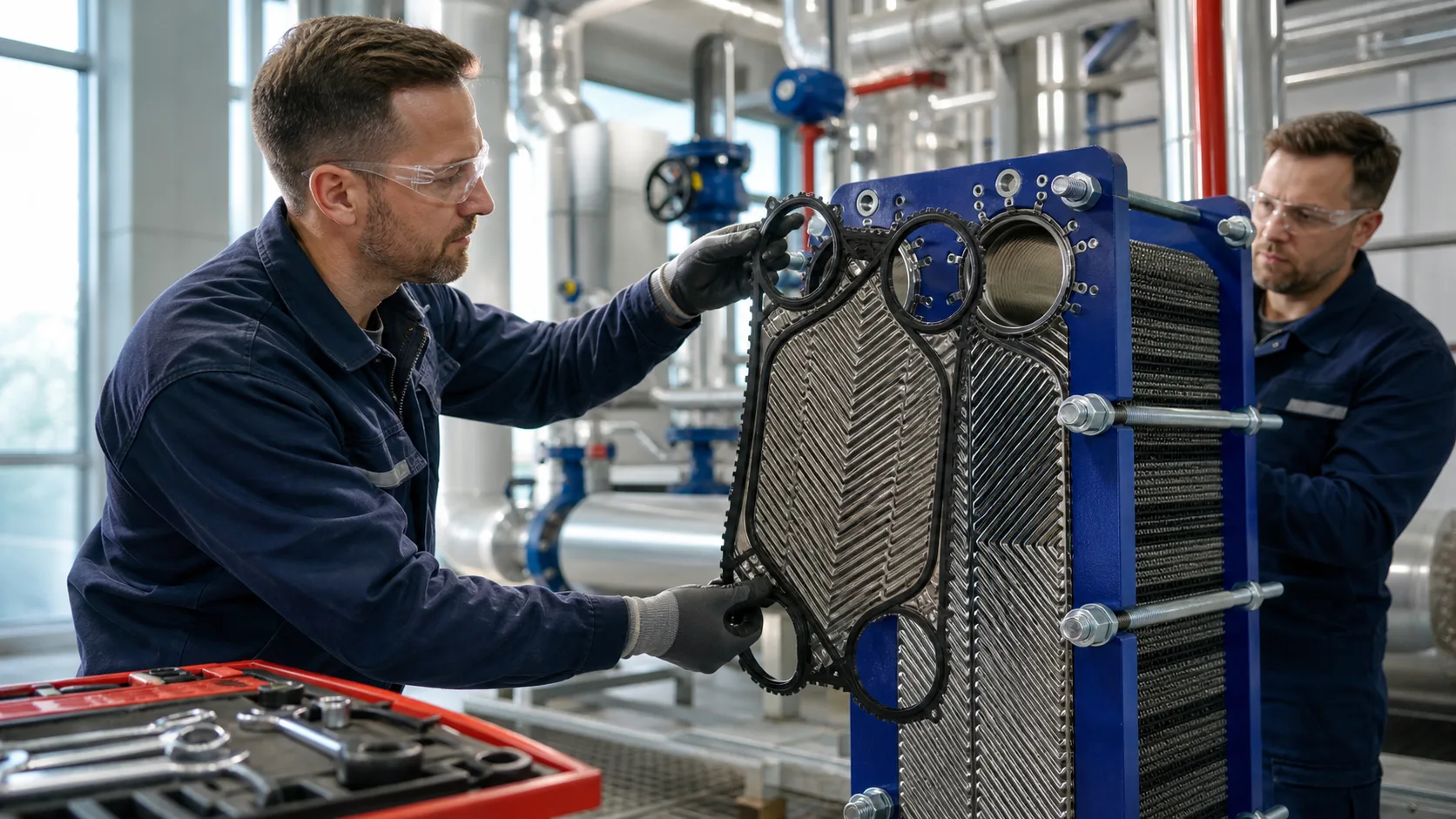
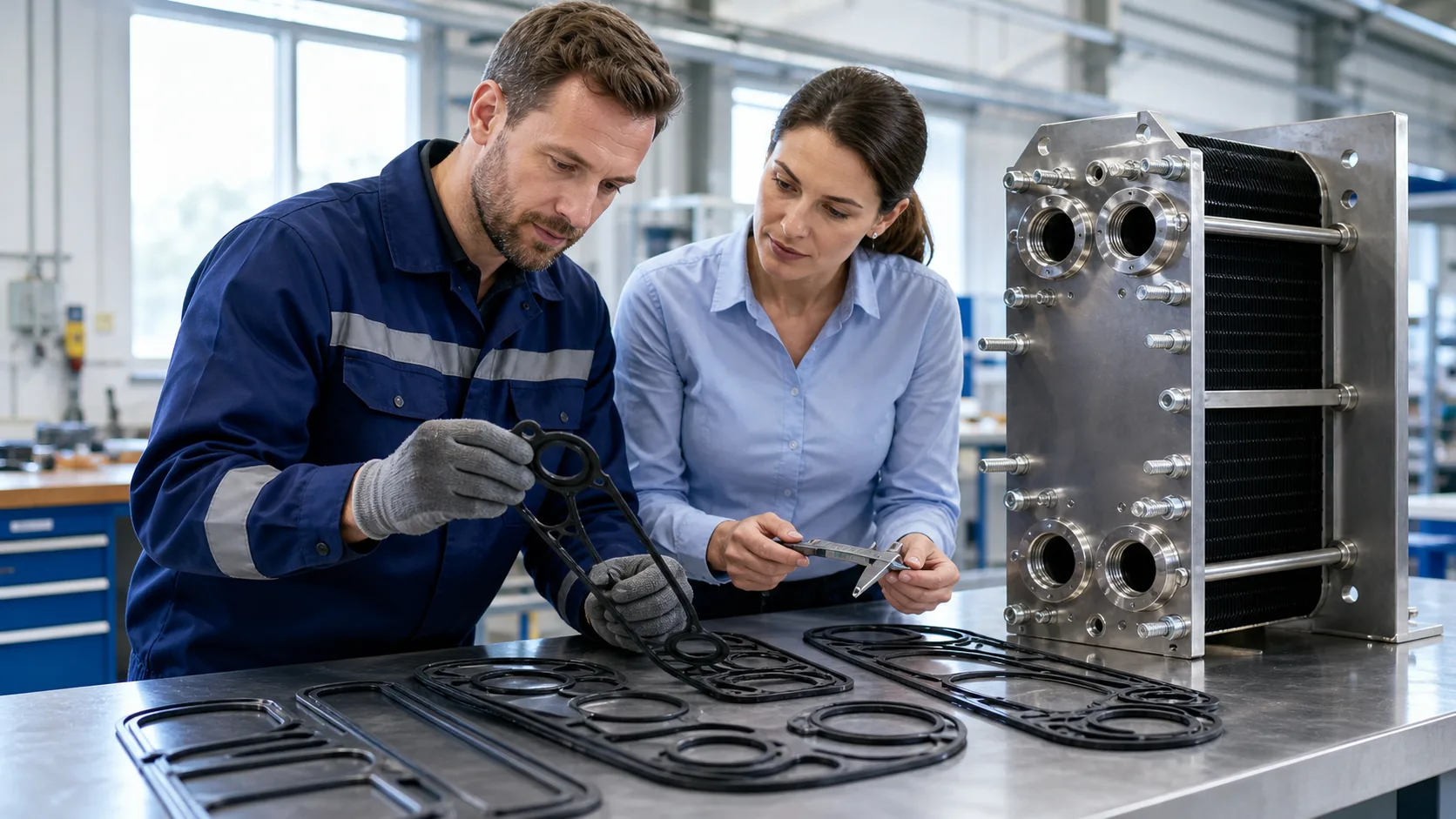
As cold weather sets in, plate heat exchangers have to work harder. Heating loops run hotter, utilities change over, and equipment that cruised along in mild weather suddenly feels the strain. If your gaskets are getting tired, this is when they start to show it.
In this article, we walk through how plate heat exchanger gaskets fail, what really matters when choosing between OEM and aftermarket, and how to think about total value, not just gasket price. Our goal is simple: help you keep heat transfer steady and leaks under control when winter demand peaks.
Rethinking Gaskets Before Winter Peak Demands
Late fall is when many plants and facilities shift into winter mode. Boilers fire more often, hot-water and glycol loops run longer, and maintenance crews race to finish work before deep freezes and holiday staffing gaps.
In that rush, gaskets can be easy to overlook. But aging or mis-specified plate heat exchanger gaskets tend to show their worst behavior right when thermal stress is highest. Problems can include:
- New seepage around frames or drain pans
- More frequent retightening to keep units sealed
- A drop in approach temperature or overall heat-transfer performance
This is usually when the OEM versus aftermarket question comes up. Do you stay with the original brand for every gasket, or is it time to consider premium aftermarket options that are built for your duty, not just your nameplate?
Because we work with both OEM and high-quality aftermarket plate-and-frame solutions, we see how different gasket choices play out in real, mission-critical service. That broad view is helpful when you want performance, not surprises, during the coldest weeks of the year.
How Plate Heat Exchanger Gaskets Really Fail
Gaskets rarely fail all at once. Most of the time, they slowly lose their sealing power until something forces you to notice. Common failure modes include:
- Thermal cycling fatigue; repeated heating and cooling hardens or cracks the elastomer
- Chemical attack from process fluids or cleaning agents eats away at the gasket surface
- Compression set from years under load flattens the profile and weakens sealing lines
- Improper torqueing causes uneven contact, local overstress, or early leaks
- Aging of the compound, where oxygen, heat, and time change the rubber structure
Operators usually see a few clear symptoms:
- Fine seepage that never quite stops, even after tightening
- Cross-contamination risk as two media start to mix
- Reduced thermal performance; approach temperatures drift higher
- Growing energy use from pumps and heaters trying to hit setpoints
Ignoring these signs brings hidden costs. Worn gaskets can mean higher pumping power, more fouling, fouled plates from small leaks, and emergency outages right when heating loads peak or production must stay online. Understanding how and why your gaskets fail is the first step to planning a replacement strategy that supports safety, reliability, and energy performance.
OEM vs. Aftermarket Gaskets Beyond the Price Tag
Many teams hear “OEM” and think “safe choice.” Original gaskets are designed for a specific plate pattern and duty range, and they often come with the equipment when it is new. They can also carry a higher price simply because of the name on the frame and the way parts are sold.
Over the years, aftermarket options have changed. Today, premium aftermarket manufacturers do careful reverse engineering of plate patterns and work on elastomer blends aimed at real-duty performance. When these products are supported by people who understand plate-and-frame behavior in the field, they can match or even beat OEM performance in many services.
Key questions to ask about aftermarket plate heat exchanger gaskets include:
- How tight are the dimensional tolerances for fit and compression?
- Is the elastomer grade proven against your media and cleaning steps?
- Has the design been applied on similar units in demanding service?
There are still times when OEM is the better call, for example:
- Highly specialized or unusual duties
- New plate designs where good aftermarket options are not yet available
- Situations where a warranty or internal policy requires OEM parts
The goal is not to “pick a side,” but to match the right gasket source to each unit and duty.
Key Criteria for Selecting Plate Heat Exchanger Gaskets
Choosing gaskets is really about understanding your process, not just reading a part number. On the process side, think about:
- Temperature range on both media and utility sides
- Chemicals present, including cleaners and biocides
- Cleaning-in-place routines and any steam exposure
- Use of glycol, chilled water, or refrigerants in colder seasons
Mechanical and operational factors matter too. Design pressure, plate corrugation pattern, expected thermal cycling, vibration, and how often frames are opened all affect which elastomer grade and gasket profile will hold up best.
In many facilities, there is also a compliance layer. Food, beverage, and some pharma applications often require specific approvals, traceability, and documentation. Quality aftermarket suppliers can support these needs when the right products are chosen.
This is where having a specialist partner pays off. Instead of treating gaskets as a one-size-fits-all item, someone who works with many brands and models can look at your actual duty, review failure history, and help select materials and profiles that make sense for each unit.
Measuring Total Lifecycle Value, Not Just Gasket Cost
It is easy to focus on the unit price of a gasket set, especially during budgeting season. But real value comes from looking at the full life of each heat exchanger.
Direct costs include:
- Gasket set purchase
- Labor for removal, cleaning, and installation
- Downtime while the unit is offline
Indirect costs can be larger. Better sealing and longer-life gaskets support stable heat transfer, so heaters and chillers do not have to work as hard to hit setpoints during cold snaps. Fewer unplanned openings also mean less disruption to production and fewer rush repairs.
A smart strategy often includes:
- Premium gaskets matched to duty
- Plate inspection and refurbishment when needed
- A planned spare stock so critical units are never waiting on parts
Compare two plants. One stays OEM only, changes gaskets often, and accepts frequent winter leaks as “normal.” The other uses a vetted aftermarket plan, pairs gasket changes with plate refurbishment, and keeps a small, organized spare inventory. Over a few heating seasons, the second plant usually sees steadier operation, fewer emergency calls, and a more predictable maintenance schedule.
Strategic Steps to Upgrade Your Gasket Program Now
Late fall is a good time for a winter-readiness check on all plate-and-frame units. A simple review might include:
- Leak and retightening history for each exchanger
- Current operating temperatures and pressures
- Past failures, including any mixing or contamination events
- Gaskets that are already at the end of their expected life
From there, working with a specialized partner helps you compare your existing OEM gaskets with premium aftermarket options. Material compatibility, plate pattern, duty severity, and maintenance windows all factor into which units to upgrade first.
The best programs are not one-year fixes. They are multi-year gasket roadmaps that blend OEM where it is needed and aftermarket where it adds value. By tying those choices to planned shutdowns and seasonal load patterns, you can spread work and cost while keeping heat-transfer performance ready for whatever winter brings.
Optimize Your Plate Heat Exchanger Performance Today
Our team at C.J. Mulanix Co. Inc. is ready to help you select, source, and maintain reliable plate heat exchanger gaskets tailored to your process requirements. We work closely with you to ensure proper fit, long service life, and dependable performance in demanding biotech and pharmaceutical environments. If you are ready to discuss specifications, get pricing, or troubleshoot an existing system, contact us today so we can support your next project.